PBC · Free expression / Charter / COVID-accountability speech · 2026-08-23
Ontario billboard ban struck down: George Katerberg’s COVID-accountability sign wins a Charter source-check
A Justice Centre Facebook post about George Katerberg’s roadside COVID-accountability billboard checks out on the core legal point: the Ontario Divisional Court found the Ministry of Transportation’s political-billboard rule violated Charter freedom of expression. The court did not decide whether Katerberg’s COVID-vaccine allegations were medically or factually correct.
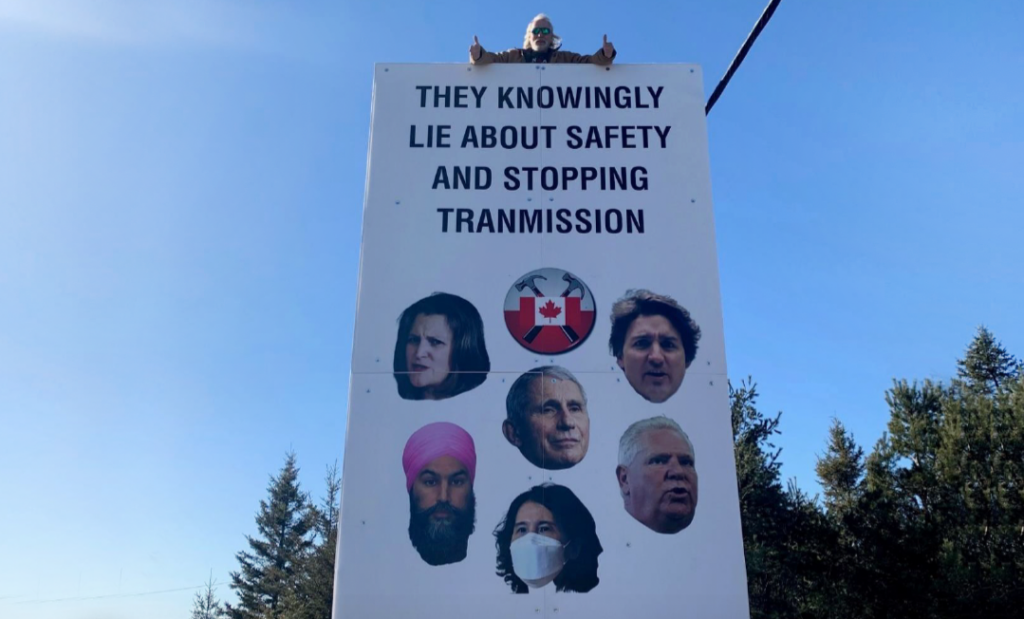
Billboard image preserved from JCCF article; screenshot of the Facebook post is in the source package.
What the post showed
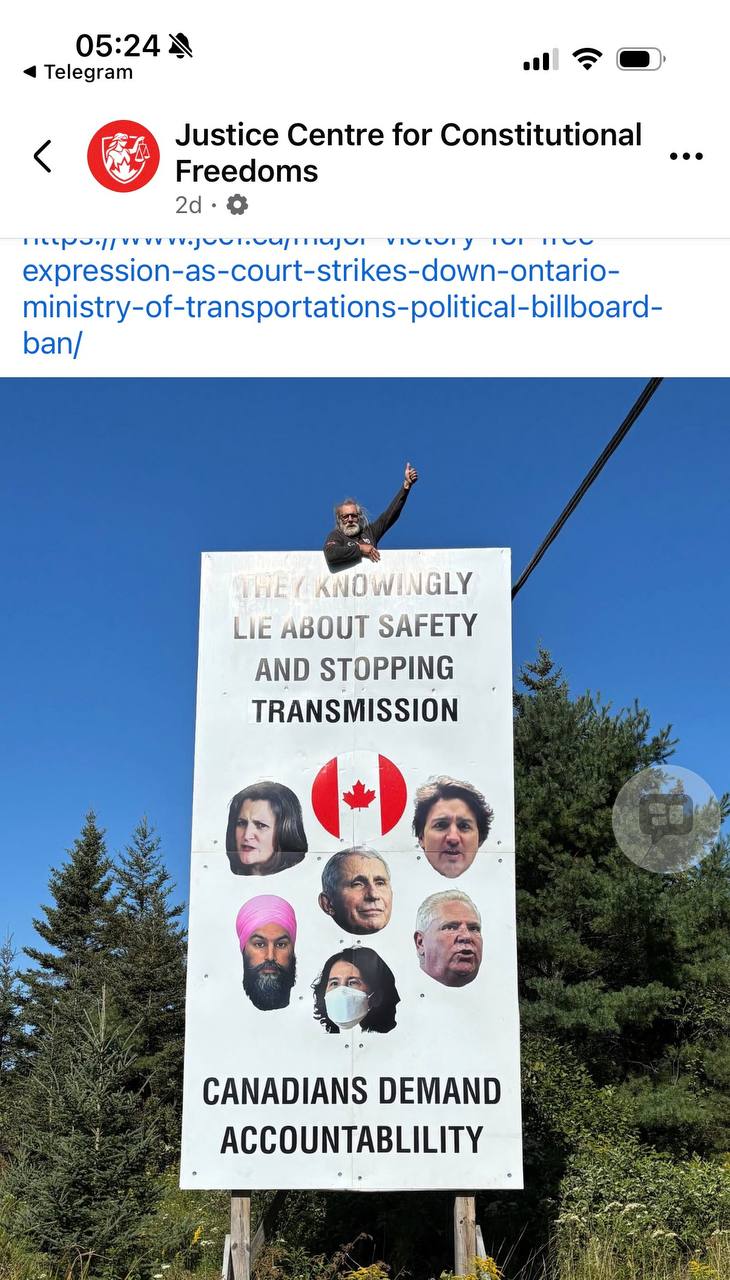
The Facebook screenshot came from the Justice Centre for Constitutional Freedoms and linked to a July 9, 2026 article titled “Major victory for free expression as court strikes down Ontario Ministry of Transportation’s political billboard ban.” The image shows Katerberg’s billboard with the message: “They knowingly lie about safety and stopping transmission” and “Canadians demand accountability.”
The billboard displayed public figures including Justin Trudeau, Doug Ford, Theresa Tam and Anthony Fauci, according to the court/JCCF source trail.
What the court decided
The primary record is Katerberg v. Ontario (Ministry of Transportation), 2026 ONSC 3991. Justice Schreck, writing for the Divisional Court panel, summarized that Katerberg rented a billboard on Highway 17 near Thessalon, Ontario, designated by MTO as a “bush country highway.” After objections and revisions, the Ministry relied on its 2025 manual rule limiting bush-country right-of-way billboard messages to goods/services or authorized local-event/community-type messages.
The court found that the Ministry permitted some expression while excluding political expression. That engaged and infringed section 2(b) of the Charter. The court accepted maintaining bush-country highway integrity as a substantial objective, but found “no rational connection” between that objective and banning political messages while allowing commercial or community messages.
Court boundary: “this case is about Mr. Katerberg’s freedom to express his views and not the correctness of those views.”
What the ruling does not prove
The ruling does not prove that COVID vaccines were ineffective, that specific officials knowingly lied, or that the billboard’s medical/public-health accusations are factually true. The court expressly said nothing in the reasons should be read as endorsing or censuring Katerberg’s views about COVID-vaccine safety, efficacy or government policy.
That distinction matters: a Charter ruling can protect a person’s right to say something without turning the statement into a court-verified fact.
Why it matters
Political speech receives strong constitutional protection in Canada, especially when it criticizes government officials and pandemic policy. The decision is significant because the Ministry could not justify a content-based rule that left commercial advertising in place while blocking political messages on the same category of highway billboards.
Claim table
| Claim | Status |
|---|---|
| JCCF post/article is real. | Supported. |
| Katerberg challenged the MTO refusal of his COVID-accountability billboard. | Supported by court reasons. |
| The Ontario Divisional Court found the policy infringed section 2(b) freedom of expression. | Supported. |
| The rule was declared of no force/effect. | Supported for section 5.8.2.1(a) of the 2025 manual. |
| The court ruled Katerberg’s COVID claims were correct. | Not supported; the court said correctness was not the issue. |