PBC Health · COVID vaccine source-check · 2026-08-26
McCullough “it stays in your body for years” Reel: case-report claim, heart warnings and what the records say
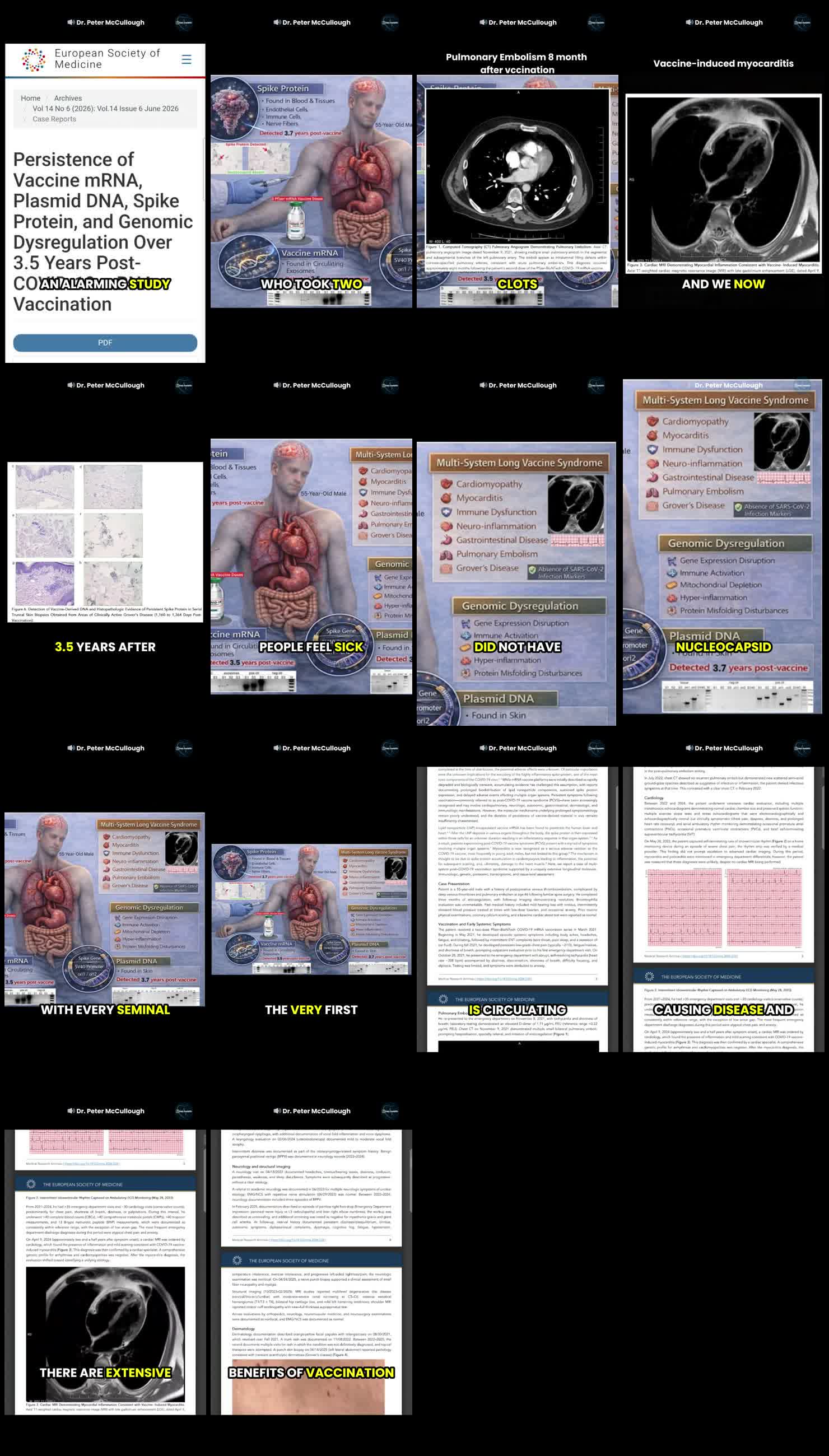
A Facebook Reel from The Wellness Company quotes Dr. Peter McCullough saying a patient’s heart damage, blood clots and circulating spike/vaccine signal came from Pfizer BNT162b2 and remained measurable 3.5 years after a booster. PBC preserved the Reel, then checked the claim against the FDA package insert, CDC/Canada safety pages and the named journal search.

Captured videoTranscriptFrame sheetSource noteClaim table
What the Reel says
"This patient did not have SARS-CoV-2 infection. His heart damage and blood clots exclusively came from Pfizer BNT 162b2 product and now he has circulating vaccine and Wuhan Spike protein in his bloodstream 3.5 years since the booster." (c) Dr. Peter McCullough
The local transcript captured McCullough saying the patient took two Pfizer vaccines and a booster, suffered blood clots and “MRI proven” vaccine myocarditis/pericarditis, had no nucleocapsid antibodies, and allegedly had Pfizer/vaccine spike protein in the bloodstream 3.5 years after the shots.
What is verified here
| Point | Finding |
|---|---|
| The Reel exists and was preserved. | Yes. PBC captured the MP4, thumbnail, metadata, transcript attempt and frame sheet. |
| FDA Comirnaty materials include myocarditis/pericarditis warnings. | Yes. The FDA package insert text captured for this file says mRNA COVID-19 vaccines have demonstrated increased risks of myocarditis and pericarditis, with onset typically in the first week after vaccination and highest observed risk in males ages 12–24. |
| Official pages acknowledge rare serious adverse events. | Yes. CDC and Canada pages identify rare serious events and ongoing safety monitoring. Canada lists blood clots with low platelets and myocarditis/pericarditis among rare reported reactions. |
| The exact ESM paper was recovered. | No. The Medical Research Archives search captured in this pass returned “No Results” for the BNT162b2/spike/myocarditis/McCullough query. That is not proof the paper does not exist; it means PBC did not recover it yet. |
| The Reel proves broad population-wide persistence for years. | No. At most, the Reel points to a claimed case report. A case report needs methods and replication before it can support broad claims. |
The records-wanted list
- The full cited European Society of Medicine / Medical Research Archives paper, DOI and PDF.
- The patient’s case timeline, infection testing, nucleocapsid antibody timing, imaging, assay method and lab validation.
- Independent expert review of whether the assay identifies vaccine product/spike specifically and rules out alternatives.
- Population data showing how often, if ever, the claimed long-term finding occurs after vaccination.
Bottom line
The Reel is a serious claim and worth preserving because it names a product, a timeline and a claimed clinical finding. But responsible wording matters: FDA, CDC and Canada records already acknowledge rare myocarditis/pericarditis and other safety signals, while the stronger claim — vaccine/spike remaining in blood for years and causing disease — remains a case-report claim until the paper and methods are recovered and replicated.
Source table
| Source | Use |
|---|---|
| Facebook Reel MP4 | Primary social-media source preserved by PBC. |
| FDA Comirnaty package insert | Official label/warning context for Pfizer Comirnaty. |
| CDC vaccine-safety excerpts | Official U.S. safety-monitoring context. |
| Canada vaccine-safety excerpts | Canadian official safety/side-effect context. |
| ESM/MRA search capture | Shows this pass did not recover the named paper through the journal search. |