Outside Canada · Digital freedom · EU online speech policy · August 19, 2026
Christine Anderson: “Trading Freedom for Safety?” EU digital controls video source-check
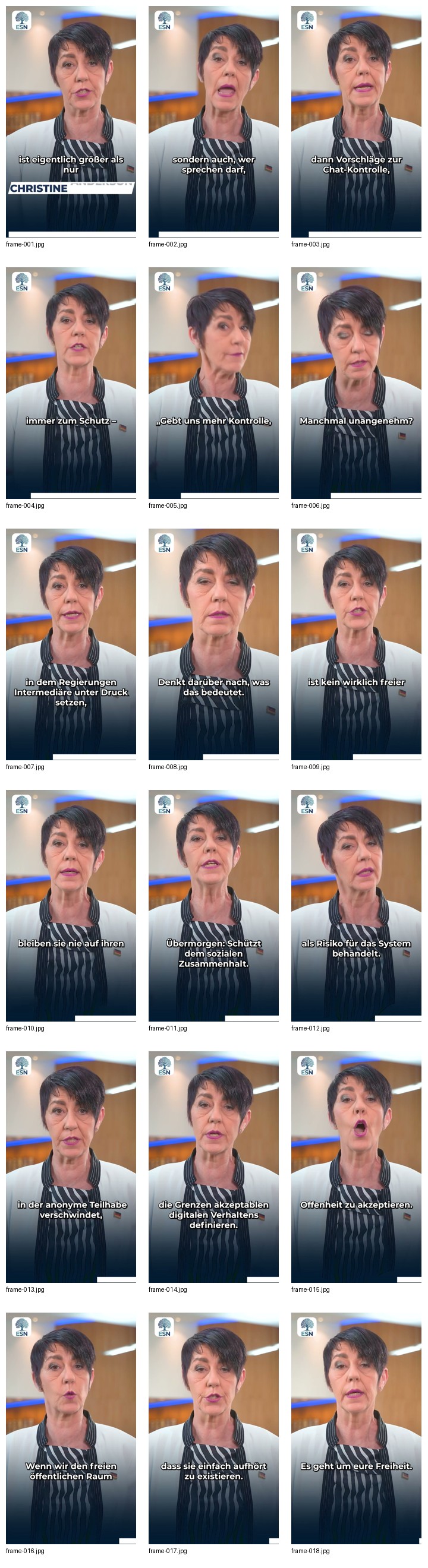
Christine Anderson’s Facebook Reel warns that laws sold as “safety” can become digital supervision. PBC preserved the full video, transcript and policy source trail, then created a dedicated Outside Canada subsection for Christine Anderson / EU digital-freedom clips.
Download preserved Facebook Reel · Open Facebook source · Open Christine Anderson section
What the Reel says
The transcript says the EU is moving “step by step” from the Digital Services Act to chat-control proposals, age verification, and a possible ID requirement for social media. Anderson argues that these measures are always sold as safety — protection of children, democracy and the public — but can build an online system where citizens must identify themselves to participate.
The core warning is that the digital public square becomes “managed speech, managed visibility, managed participation.” She says Europe should defend free citizens rather than digitally supervise them.
What official sources say
The European Commission’s Digital Services Act page says the DSA introduces rules for online services including social media, marketplaces and app stores, and frames the purpose as a safe and trustworthy online environment that respects fundamental rights. That confirms the law/policy track exists, though the Commission describes it in rights/safety language rather than Anderson’s “permission-based space” framing.
The video also names “chat control” and age-verification systems. PBC preserved European Parliament/Commission source context where accessible; some EU/Council pages blocked raw download in this environment, so those limits are documented in the source note.
Claim ledger
| Claim / issue | PBC status |
|---|---|
| EU online-platform regulation is real. | Supported by the DSA source page. |
| Age verification and child-safety proposals are real policy debates. | Supported as a public EU policy track; exact implementation details still depend on proposals and national rollout. |
| The EU is building a permission-based digital public square. | Anderson’s warning/prediction; not a neutral official wording. |
| Anonymous participation and private communications are at risk. | Policy concern to track; article preserves source links and records wanted. |
Transcript
[0.00-6.40] Hello, once again from Brussels. What is happening in Europe right now is actually bigger than just
[6.40-12.88] one law. It is much bigger. Step by step, under different labels, the European Union is beginning
[12.88-19.76] to regulate not only what happens online, but who may speak, how people may speak, and under
[19.76-26.56] what conditions citizens may access the digital public square itself. First, there was the Digital
[26.56-33.60] Services Act, then proposals for chat control, now age verification systems, and an idea
[33.60-40.64] requirement for social media is already in the works. Always presented as reasonable, always
[40.64-46.40] for safety, always for protection, protection of children, protection of democracy, protection
[46.40-52.96] against the disinformation. But every generation in history has heard the same argument.
[53.68-60.40] Give us more control, and we will keep you safe. That's a lie. The internet was once the
[60.40-68.48] freest public space in human history. Messy? Yes, sometimes unpleasant, of course, but it was free.
[69.20-75.04] And now the EU is slowly transforming it into a permission-based space, where platforms have to
[75.04-80.80] monitor speech, where governments pressure intermediaries, where algorithms shape visibility,
[80.80-87.12] and where citizens increasingly have to identify themselves simply to participate online.
[87.84-94.56] Think about what that means. A society where access to digital public space depends on age
[94.56-101.04] verification, identity systems, content moderation, structures, and regulatory compliance
[101.04-107.84] is no longer a truly free public square. It becomes managed speech, managed visibility,
[107.84-116.72] managed participation. And when such systems exist, they never remain limited to their original
[116.72-123.20] purpose. It's the slippery slope. Today, protect the children, tomorrow, protect democracy,
[123.20-129.68] the day after, protect social cohesion, or whatever they come up with next. And suddenly,
[129.68-137.28] every political opinion that challenges prevailing orthodoxy, risks being treated as a systemic risk.
[138.00-144.00] This is the real danger, not one single law, but the architecture being built,
[144.00-150.56] piece by piece. A society where anonymous participation disappears,
[150.56-156.80] where private communication is weakened, where online platforms increasingly act under political
[156.80-164.16] pressure, and where unelected bureaucrat structures define the boundaries of acceptable digital
[164.16-172.48] behavior. Europe should defend free citizens and not digitally supervise them, because freedom
[172.48-181.36] means accepting openness. Freedom means tolerating risks, and democracy means trusting citizens
[181.36-188.24] more than bureaucracies. If we sacrifice the free public square in the name of safety,
[188.24-195.20] we will inevitably discover that we have protected democracy to an extent that it simply
[195.20-203.52] ceases to exist altogether. Don't let it happen. Don't let the government fool you into believing
[203.52-209.84] they're looking out for your own good. Fight it. Tooth and nail. It is about your freedom.
[209.84-213.68] It is about your fundamental rights. Thank you so much. See you.