Behind the Trigger · Canadian crime statistics · Firearms source-check
Canada crime stats TikTok: real increases, weaker immigration-causation leap
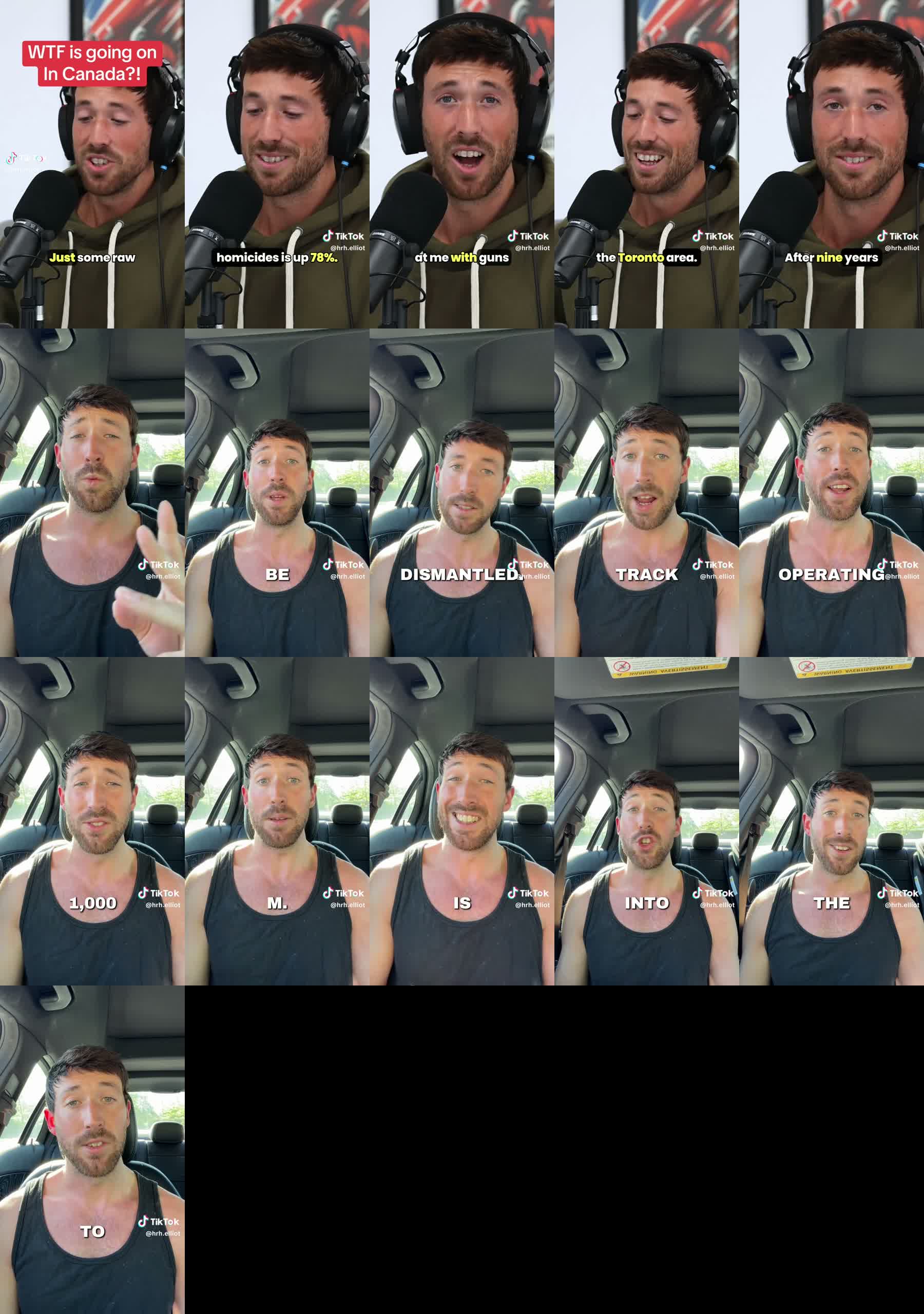
A TikTok from @hrh.elliot asks what caused a “massive increase” in Canadian crime and says legal gun owners are not the source of the problem. The crime-statistic concern is real. But the video’s broad immigration/demographic-causation explanation goes beyond what the official numbers prove by themselves.

Short verdict
Real crime-statistic kernels; immigration-causation leap not proven. Statistics Canada data supports major increases in several crime categories since 2015, including raw violent Criminal Code incidents, extortion and firearm-use/discharge/pointing offences. But the data does not, on its own, prove that immigration or demographic change is the single cause.
What the TikTok claims
The transcript says violent crime, gang-related homicide, “violent offences,” extortion and auto theft are up since 2015; says licensed gun owners are not the people causing the crime; and points to demographic change, weak immigration vetting, overstays and India-linked organized crime.
What the numbers support
| Claim area | Best checked source-trail result |
|---|---|
| Total violent Criminal Code violations | Raw incidents increased about 54.9% from 2015 to 2024. The population-adjusted rate increased about 33.9%. |
| Gang-related homicides | Gang-linked homicide victims increased about 79.4% from 2015 to 2023, close to the video’s 78% claim. In 2024 the increase from 2015 was about 56.7%, after a decline from 2023. |
| Firearm-use/discharge/pointing offences | StatCan’s “total firearms, use of, discharge, pointing” row increased about 130.6% in raw incidents from 2015 to 2024; the rate increased about 99.5%. If this is what the video means by “violent offences up 116%,” the direction is supported but the exact number depends on category/year. |
| Extortion | Raw extortion incidents increased about 330.1% from 2015 to 2024; the rate increased about 271.7%. The video’s 357% is directionally consistent with a very large rise but not the exact 2015→2024 StatCan calculation used here. |
| Auto theft | Raw motor-vehicle theft incidents rose about 46.1% from 2015 to 2023, matching the video. But after a 2024 decline, the 2015→2024 increase was about 25.4% raw and 8.4% by rate. |
Firearms context matters
Statistics Canada’s 2024 firearms report says firearm-related violent crime accounted for 2.6% of all police-reported violent crime in 2024. Nationally, police reported 14,488 firearm-related violent crimes, almost 200 fewer than in 2023, marking the sharpest decline in the rate in more than 10 years.
That does not mean “nothing is happening.” Toronto’s firearm-related violent-crime rate rose 12% and reached its highest level in 15 years. Ontario and Quebec increased year-over-year. The national average and local reality can point in different directions at the same time.
Legal gun-owner nuance
The TikTok says legal gun owners are not the people causing the crimes. Statistics Canada provides a strong caution against blaming licensed owners as a class: in 2024, the majority — 80% — of people accused in firearm-related homicides did not hold a valid licence for the firearm classification involved.
That is not the same as saying every licensed owner is harmless or that no legal firearm is ever misused. It means policy claims should distinguish licensed ownership, illegal possession, smuggling, gang violence, domestic violence, stolen firearms and repeat violent offenders.
The Bishnoi / India-linked organized-crime point
The video refers to a group from India claiming more than 1,000 “soldiers” in Canada. CBC and Global reporting connect this to the Bishnoi gang: a reported letter to B.C. police claimed roughly 1,000 gunmen/foot soldiers in Canada. Canada has also listed the Bishnoi gang as a terrorist entity, and RCMP/U.S. DOJ reporting confirms a serious transnational organized-crime enforcement file.
Important evidence boundary: a gang’s letter claiming “1,000” is not the same thing as an independently verified headcount. It is still a serious public-safety lead because police, federal listing decisions and cross-border enforcement actions treat the network as real.
What is not proven
The video’s weakest leap is the broad causal line from crime increases to “the demographic of the country” and immigration vetting. The source trail supports that some transnational organized-crime files involve foreign-linked networks and that Canada has real border/visa/enforcement questions. But the crime tables do not prove that immigration or demographics are the single or primary cause of the nationwide crime changes.
Possible / proven / not proven
| Category | Finding |
|---|---|
| Proven | Several crime categories rose sharply from 2015, including violent Criminal Code incidents, extortion, firearm-use/discharge/pointing offences and motor-vehicle theft through 2023. |
| Proven with nuance | National firearm-related violent crime declined in 2024, but Toronto/Ontario had increases. Most accused in firearm-related homicides did not hold a valid firearm licence for the firearm involved. |
| Real organized-crime concern | Bishnoi/transnational organized-crime reporting and enforcement actions are real; the “1,000” figure is a reported gang claim, not a verified census. |
| Not proven | That immigration/demographic change alone caused the crime increases, or that licensed Canadian gun owners are the driver of firearm violence. |
Canadian caution
This Behind the Trigger article is not tactical advice and not legal advice. Canada has strict firearms storage, transport, licensing, possession and self-defence rules. The useful policy question is not “copy the U.S.” It is: what data separates licensed owners from illegal possession, smuggling, gangs, repeat violent offenders and failed supervision?
Source trail
- Original TikTok
- Statistics Canada: Police-reported crime in Canada, 2024
- Statistics Canada: Firearms and violent crime in Canada, 2024
- Statistics Canada: gang-related homicide victims table
- Global News: violent crime up since 2015, police say not the full story
- CBC: Bishnoi gang letter claim
- Global: Bishnoi extortion letter / 1,000 gunmen claim
- RCMP Operation Hardball statement
- U.S. DOJ: Operation Hardball
- Public Safety Canada: Bishnoi gang terrorist listing
- PBC source note and captures
- Transcript
- Contact sheet