PBC Health · inversion / back-pain source-check · 2026-08-28
I bought an inversion table and love it — but who should not hang upside down?
A Facebook Reel from Yoga on the Inside says hanging upside down can decompress the spine, help circulation, lymph flow, digestion, focus and mood — while warning against it for high blood pressure, vertigo, headaches and certain ailments. Since a reader says they bought an inversion table and love it, PBC preserved the clip and checked the practical safety boundary.
Captured video Source note Claim table
What the Reel actually shows
The video does not show a freestanding inversion table. Frame analysis shows a yoga rope wall / Iyengar-style supported inversion with a pelvic sling. The idea overlaps with inversion-table traction — going partly or fully upside down — but the equipment and supervision level are different.
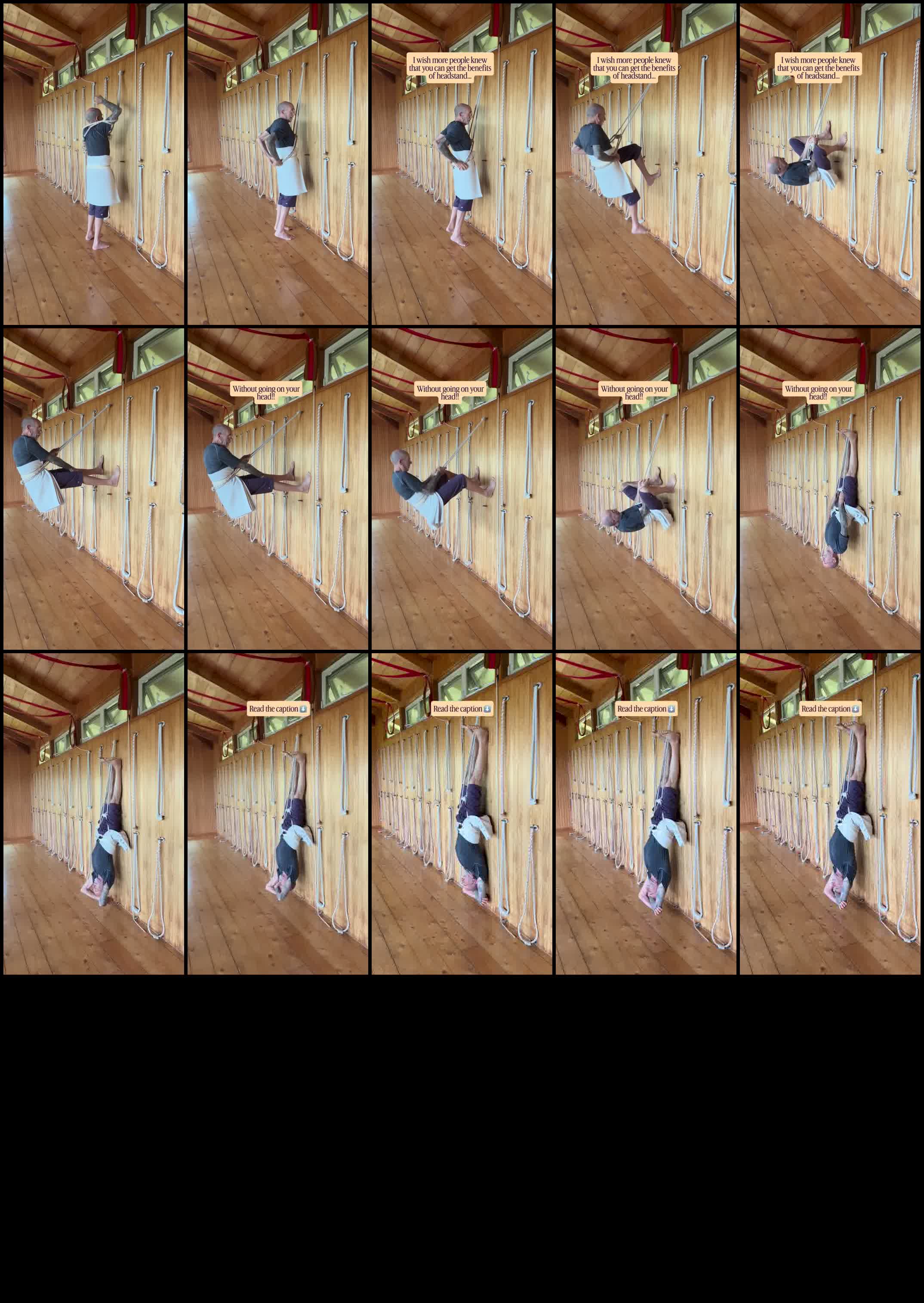
Caption claim preserved
✨ Hanging upside down has so many benefits. (Not to be done with certain ailments,  high blood pressure, vertigo, and headaches and always best to do with an experienced teacher) And though it’s not exactly like practicing headstand, you can still get a lot out of it.

✨ It improves circulation to all of your organs and glands.

✨It decompresses the spine! It creates space and room between the vertebrae which can help relieve back pain, improve posture, and rehydrate the discs

✨It promotes lymphatic drainage. The lymphatic system required gravity and movement to drain!

✨Inverting promotes healthy digestion! It can be super helpful if you are constipated or experiencing bloating. Turning everything upside down really gets things moving!

✨ It can improve focus and clarity. Reversing blood flow increases the amount of oxygen that goes to the brain.

✨ It can be a mood booster! Going upside down activates the parasympathetic nervous system which lower the hormones of stress and increases the “feel-good” neurotransmitters!!

✨ And you can get all of these benefits from hanging upside down 🙃

Want to experience the ropes?

Comment “MAUI” and join us for our 7 day immersion in October!

#yoga #yogapractice #yogainspiration #yogateacher
What sources say
| Point | What the evidence/source trail says |
|---|---|
| Back/spine relief | WebMD describes inversion as spinal traction that can temporarily create more space between compressed vertebrae. It says evidence is mixed; some people report short-term relief, but it is probably not an effective long-term treatment for many back-pain cases. |
| Sciatica/disc disease | WebMD cites a 2012 England study where inversion therapy plus physical therapy helped some people with sciatica from a protruding disk and may reduce need for surgery. PubMed source trail preserved related inversion-therapy and low-back-pain records. |
| Safety warnings | WebMD says inversion tables slow heartbeat, raise blood pressure and increase eye pressure; it flags risks for high blood pressure, glaucoma/eye disease, heart disease, stroke history, hiatal hernia and inner-ear conditions. Healthline similarly lists cardiovascular disorders, glaucoma/eye infections, bone/joint disorders, pregnancy, obesity and blood-clotting medications as caution areas. |
| Eyes/glaucoma | PubMed search preserved multiple papers on headstand/Sirsasana and intraocular pressure or glaucoma progression. This does not prove the same risk level for every inversion table setting, but it supports caution for eye-pressure/glaucoma patients. |
| Wellness claims | The Reel’s claims about organs/glands, lymphatic drainage, digestion, focus and mood are preserved as wellness claims. PBC did not find enough direct clinical evidence in this pass to present them as proven medical outcomes. |
Practical checklist if you love your inversion table
- Start shallow: partial angle first, not fully upside down.
- Use short sessions; stop for dizziness, headache, chest pressure, vision changes, nausea, numbness or worsening pain.
- Have someone nearby the first few times and confirm the ankle locks/frame are secure.
- Do not bounce or twist aggressively while inverted.
- If using it for back pain, treat it as temporary traction/stretching — not a replacement for diagnosis, physiotherapy, imaging when indicated, or medical care.
- Ask a clinician first if you have blood-pressure, heart, stroke, eye-pressure/glaucoma, vertigo/inner-ear, hernia, pregnancy, bone-density or anticoagulant issues.
Source package
PBC preserved the MP4, thumbnail, caption, metadata, frame sheet, audio extraction, transcript attempt, PubMed searches and safety-source captures.
Open source note · Open claim table · Original caption · Eye-pressure PubMed trail