Video deep dive · Canadian digital rights · source-check
Karla Treadway and John Carpay: six Canadian digital bills and the surveillance-state warning
September 22, 2026 update · Bill C-34 claim check
Does C-34 require ID uploads and give Ottawa control over access to services?
A 79-second Facebook reel posted by Gregory James, labelled Canada / New Brunswick — Access to Services, warns that Bill C-34 will pass in October, require ID uploads and put a new policy condition between people and services. The concerns about age checks and regulatory discretion have a factual basis. The broader claims go beyond what the bill establishes.
Verdict: a real age-assurance and online-safety proposal, with significant privacy questions—but no verified October implementation date, no blanket government-ID upload rule for all information, and no provision identified making car registration dependent on accepting unspecified political policies.
1. It is not yet law
Parliament’s LEGISinfo record, checked September 22, lists C-34 at second reading in the House of Commons. First reading was completed June 10; Royal Assent is not recorded. That does not rule out future progress, but an October passage or start date is not established by this record. The proposed Digital Safety Act’s section 130 and the proposed Commission Act’s section 24 leave commencement to an order or orders of the Governor in Council—not automatically the moment a bill passes.
2. Age assurance is real; compulsory ID upload is not the only method written into the bill
Section 27 of the proposed Digital Safety Act would require adequate age-verification or age-estimation measures to prevent under-16s from holding accounts on social-media services specified through regulations, subject to the exemption process in section 29. Section 22 separately addresses children’s exposure to pornographic content on regulated services.
These provisions do not prescribe uploading government-issued ID as the universal method. They do require age-checking measures, and adults could face checks as part of implementation. That is a legitimate privacy concern: Michael Geist’s analysis argues that a children’s account ban can translate into age verification for everyone using affected platforms.
The text also contains safeguards. Sections 22(2) and 27(2) limit collection and use to age-assurance purposes and require protection and destruction of collected information once verification or estimation is completed. Those duties are not a guarantee of flawless implementation, accurate estimates or freedom from breaches. Nor is age assurance necessarily the same thing as a single government digital-ID credential.
3. A commission and later regulations are genuinely proposed
Part 2 would establish the Digital Safety Commission of Canada. The bill leaves important choices to regulations, including covered services, design features and implementation details. Canadian Heritage acknowledges this, while presenting the framework as protection from online harms, particularly for children. Osler’s legal overview likewise notes that the precise scope will depend on regulations. The right question is how those powers are bounded and scrutinized—not whether they exist.
4. The leap to ordinary government-service conditions is not established
The bill regulates social-media services, qualifying chatbot services and potentially additional prescribed categories of online services. It is not a general rulebook for every transaction with government. Proposed section 3 expressly says the duties do not apply to a telecommunications provider’s service supplying basic internet connectivity.
The reel’s car-registration example and warning that future conditions could be “anything they want” are a prediction about broader digital governance. This review did not identify a C-34 clause requiring political-policy agreement to register a vehicle or receive government services. Significant delegated powers deserve scrutiny, but that concern is not proof of the specific service-denial mechanism described.
What to watch next
- Amendments, votes and any Royal Assent or commencement orders.
- Which services regulations cover and which age-assurance methods they permit.
- Whether adults can prove an age threshold without surrendering identifying documents.
- Independent testing, deletion controls, breach accountability and routes to challenge mistakes.
Scope: this update checks C-34 only. The earlier six-bill interview and its status table remain below as historical coverage from July 20, not a live status tracker for the other five bills.
Watch the source reel
Gregory James · Facebook upload dated September 20, 2026 · approximately 79 seconds. Commentary, not an official explanation of the bill.
Watch the original on Facebook if the embedded player is unavailable. Facebook may require login. Timestamp guide · Source note · Claim ledger.
Earlier interview and six-bill comparison — July 20, 2026
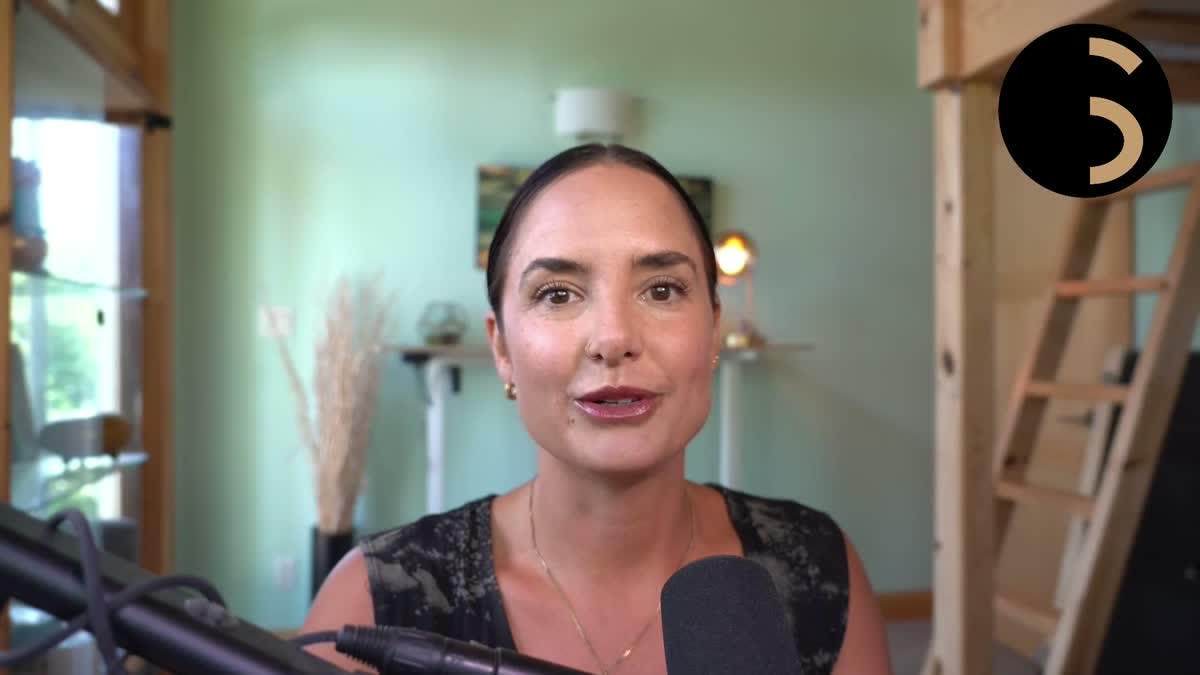
Karla Treadway's X post with constitutional lawyer John Carpay argues that six Canadian bills, taken together, move Canada toward state control over online speech, communications metadata and internet access. The warning is serious enough to check bill by bill.
Watch the full episode
Original X post · YouTube full episode · Source note and transcripts
People and accounts to follow
| Person / organization | Role in the video | X account |
|---|---|---|
| Karla Treadway | Host of The Sovereign Sphere Podcast; author of the X post | @thesovereignceo |
| John Carpay | Constitutional lawyer interviewed in the episode | @johncarpay |
| Justice Centre for Constitutional Freedoms | Organization referenced in the post and associated with Carpay | @JCCFCanada |
Note: PBC is providing follow links, not making a blanket endorsement. Each video remains a lead; legal and policy claims still need primary-source checks.
Short verdict
The interview is pointing at real legislation. C-11, C-18, C-8 and C-9 were law in the official records checked. C-22 and C-34 were active bills, not yet law, at capture time. The civil-liberties concern is real: these measures touch broadcasting discoverability, news-platform bargaining, cyber-system orders, hate propaganda/access to religious or cultural places, lawful access to information, and a proposed Digital Safety Commission/social-media safety framework.
The strongest phrase in the post - that Canada has "passed six bills" and that the package already gives government control over everything said online and whether people can access the internet - should be treated as advocacy shorthand, not a literal legal status statement for every bill.
Bill-by-bill source table
| Bill | Official title / status checked | Government-stated purpose | Civil-liberties concern raised in the video |
|---|---|---|---|
| C-11 | Online Streaming Act; Royal Assent April 27, 2023 | Modernize broadcasting rules for online streaming and Canadian content | CRTC/government influence over discoverability and online content systems |
| C-18 | Online News Act; Royal Assent June 22, 2023 | Require large platforms to bargain with news businesses for news content | News-link availability and platform control over what Canadians can share/read |
| C-8 | Cyber security / Telecommunications Act amendments; Royal Assent June 15, 2026 | Protect telecom and critical cyber systems | Ministerial/cabinet order powers over telecom/cyber systems, including secrecy concerns |
| C-9 | Combatting Hate Act; Royal Assent June 18, 2026 | Strengthen hate-crime / hate-propaganda protections and access to religious/cultural places | Potential chilling effects on speech, religious teaching and controversial expression |
| C-22 | Lawful Access Act, 2026; House third reading June 18, 2026; awaiting Senate first reading at capture | Timely access to information for law enforcement and security contexts | Metadata/privacy/encryption risks and "who you talk to" surveillance concerns |
| C-34 | Safe Social Media Act; at second reading in House at capture | Digital Safety Act / Digital Safety Commission; safer social media and AI chatbots for children | Age verification, digital ID pressure, platform-scope regulations and content-control concerns |
What the interview says
Carpay's central argument is cumulative. He says each bill has a protective label - Canadian content, news funding, cyber security, hate protection, lawful access, child safety - but that the stack gives Ottawa a much larger architecture for regulating speech, identity, access and surveillance.
The transcript's clearest passage lists the sequence: C-11 as online streaming control, C-18 as online news, C-8 as cyber/telecom powers, C-9 as hate-propaganda/access protections with speech-risk concerns, C-22 as lawful access with privacy/encryption implications, and C-34 as a Digital Safety Commission and social-media/age-verification framework.
What is confirmed
- All six bill numbers and titles correspond to real Parliament/Canada/Justice source pages.
- C-11, C-18, C-8 and C-9 had received Royal Assent in the records checked.
- C-22 and C-34 were active 45th Parliament government bills, but not yet law at capture time.
- The YouTube full episode exists on The Sovereign Sphere channel and matches the X post subject.
- The named accounts in the X post are Karla Treadway, John Carpay and JCCF Canada.
What remains interpretation
"Social credit system" is not the statutory wording. It is the interview's warning about direction: if age/identity verification, lawful-access rules, digital safety regulators and telecom/cyber-system orders keep expanding, critics fear that access to online life could become identity-linked, monitored and politically conditioned.
Supporters of these bills frame them differently: child protection, cyber security, Canadian media support, hate-crime prevention, and law-enforcement access. PBC's job is to keep both frames visible while checking what the bills actually are.
Bottom line
The warning is not imaginary, but it needs precision. Canada has real digital-control legislation and active proposals that deserve close public scrutiny. But the exact legal status matters: four of the six were law in the records checked, while C-22 and C-34 were still moving through Parliament. The phrase "protecting children" should not end debate; it should start a careful one about age verification, anonymity, platform power, lawful access and who gets to decide what Canadians can say or see online.