PBC Canadian heritage · Facebook source-check · 2026-09-15
Wawa runestone post checked: real Ontario rune find, not Viking proof
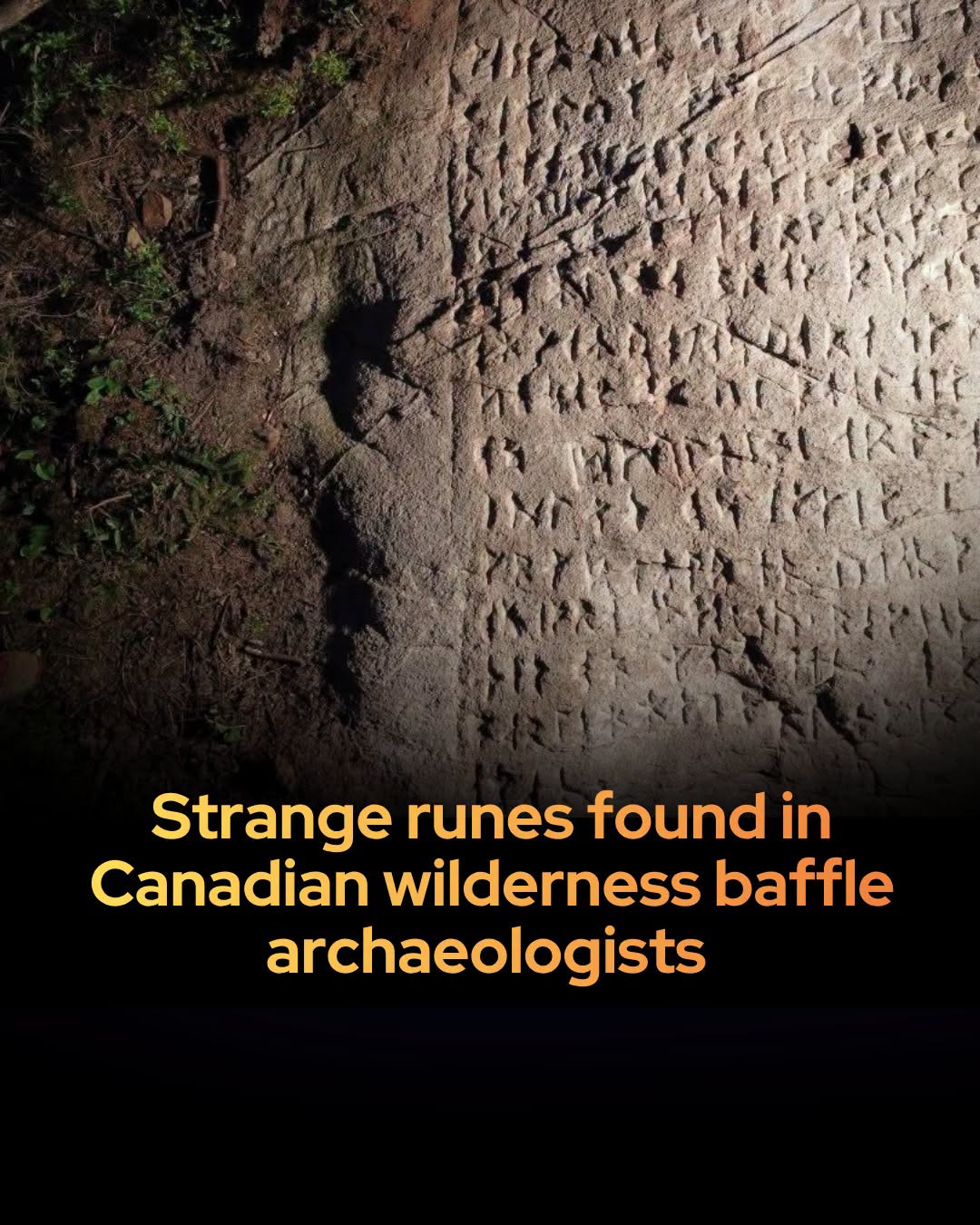
A Facebook post says a fallen tree exposed a massive stone slab with 255 mysterious runes in the Canadian wilderness. The core discovery checks out. The careful version is narrower: researchers identify it as the Wawa Runestone near Wawa, Ontario — a real runic Lord’s Prayer in Swedish, likely tied to 1800s Scandinavian/Hudson’s Bay Company history, not proof of Vikings in northern Ontario.
Quick verdict
Real find, wrong lesson if it becomes Viking proof. OCARE and CBC describe a genuine Wawa-area bedrock inscription with 255 runic characters and a nearby boat carving. Specialist Henrik Williams identified the text as a Swedish-language Lord’s Prayer derived from a 1611 runic pattern. OCARE says it is not Viking in nature and not a hoax.
What the Facebook post gets right
- The broad story is real: a tree/stump event exposed carved bedrock in northern Ontario near Wawa.
- The reported number — 255 runic characters — matches OCARE/CBC descriptions.
- The find did puzzle archaeologists and required runology specialists.
- The site includes a second carving: a boat with about 16 figures and 14 X/cross/star-like marks.
What needs correction
The visible Facebook poster does not explicitly say “Vikings,” but this story is easy to misread that way. Researchers say the Wawa inscription uses runes, but it is not a Viking-age artifact. CBC reports Ryan Primrose worried people would jump to that conclusion before the research was ready.
The better frame is Canadian heritage, migration and religious history: OCARE/CBC point to Swedish-language text, a 1611 Lord’s Prayer pattern, possible 1800s Scandinavian workers connected to Hudson’s Bay Company activity, and an unresolved question about why someone carved it there.
Evidence table
| Point | Status |
|---|---|
| 255 runes near Wawa, Ontario | Supported by CBC and OCARE. |
| It spells the Lord’s Prayer in Swedish | Supported by OCARE and CBC attribution to Henrik Williams. |
| Vikings carved it | Not supported; OCARE says not Viking in nature. |
| Likely 1800s | Working theory; exact date remains uncertain. |
| Public tourist site now open | Not confirmed; CBC says protection/access plans were being developed with the property owner. |
Why PBC is logging it
This is a useful Canadian-history source check because it shows how a dramatic social caption can point to a real discovery while still needing guardrails. The story is interesting enough without turning it into a fake Viking proof claim.
Source package
Outside sources checked
Evidence label: public Facebook lead + archaeology/history source-check. This article verifies the Wawa Runestone source trail and correction boundaries; it does not publish the exact private-land location or claim final answers to the carver/date question.