Survival · Food storage · Source check
WWII D Ration chocolate: survival-food lesson or TikTok overclaim?
A TikTok from waypointsurvivalshorts / Survival Kitchen 1930 shows a WWII-style Army chocolate bar and claims it can sit without a fridge for years. The history is real. The homemade shelf-life claim needs caution.
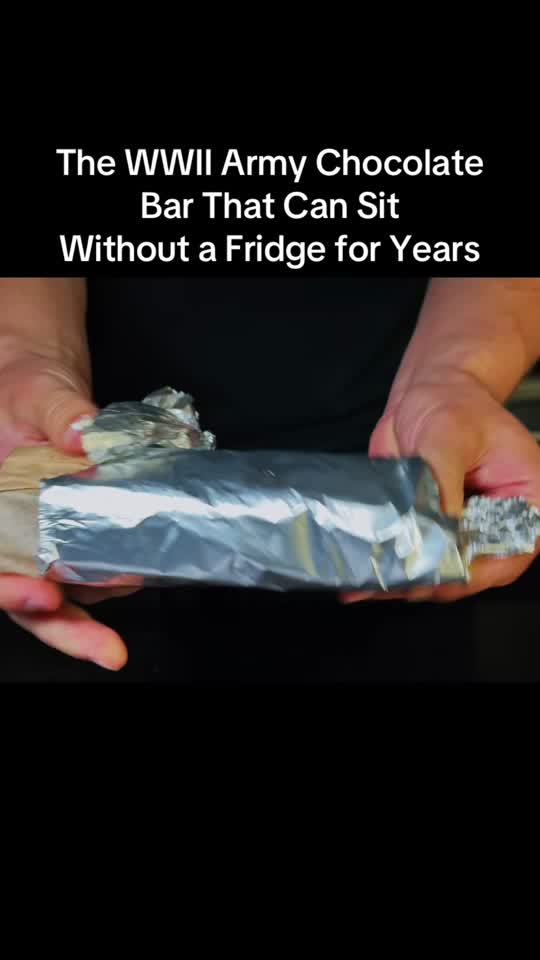
Evidence label: historically grounded survival-food idea, but not a proven home-storage guarantee.
Short verdict
Mostly true as history, cautious as prepper advice. U.S. military chocolate rations were real. The Army and Hershey developed dense, high-calorie chocolate rations for field use, and Hershey’s later Tropical Chocolate Bar was designed to hold its shape in extreme heat. But a TikTok/home-kitchen version is not automatically a lab-tested multi-year ration.
What the TikTok shows
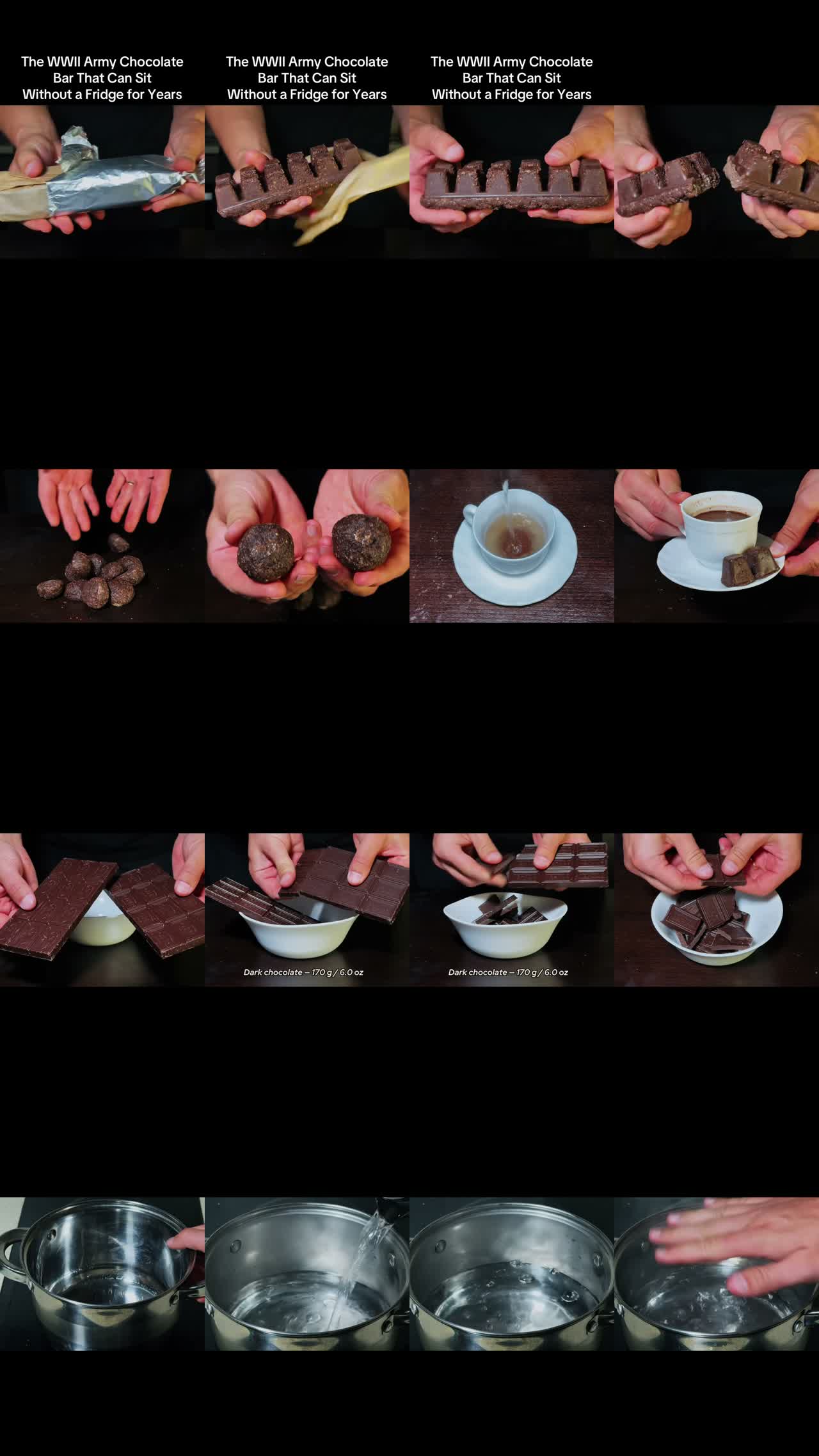
The downloaded TikTok metadata gives the title: “The WWII Army Chocolate Bar That Can Sit Without a Fridge for Years.” The contact sheet shows a dark, dense chocolate-style bar, pieces being used like a ration or hot-drink base, and an ingredient caption: “Dark chocolate – 170 g / 6.0 oz.” The MP4 had no audio stream, so PBC could not transcribe narration.
View contact sheet · Source note
The real WWII ration history
The U.S. Army’s Field Ration D, commonly called the D ration, was a real emergency chocolate ration. Tasting History summarizes the purpose: high calories, pocket size, heat resistance, and intentionally limited palatability so soldiers would not eat it casually before an emergency.
Hershey Community Archives records that Hershey later produced the Tropical Chocolate Bar for military use. Hershey says it was formulated so the bar could hold its shape for one hour at 120°F, and lists 1943 ingredients including chocolate liquor, skim milk powder, cocoa butter, powdered sugar, vanillin, Vitamin B-1 and oat flour.
Why it worked as survival food
- Low moisture: chocolate/sugar/fat/powdered ingredients are less perishable than wet foods.
- High calories: dense fat and sugar pack energy into a small bar.
- Heat resistance: military formulas used ratios and binders such as oat flour to resist melting better than ordinary candy bars.
- Emergency use: the D ration was not meant to be dessert; it was a compact survival tool.
What not to overclaim
A home version made from store chocolate, milk powder, sugar, cocoa butter or oat flour may be useful as an emergency snack experiment, but PBC would not call it guaranteed “years without a fridge” food unless it is properly packaged and tested. Homemade bars can still go rancid, absorb moisture, grow mold if contaminated, attract pests, melt, bloom, or lose quality.
For preparedness use: keep it cool, dry, sealed, labelled and rotated. Discard anything with mold, off smell, wet packaging, insect damage or rancid taste. Anyone with allergies, diabetes or medical diet limits should treat this as food-history content, not medical advice.
Practical PBC takeaway
The useful survival lesson is not “copy a TikTok and forget it for years.” It is: learn why old military rations were dense, low-moisture, calorie-rich and resistant to heat, then apply the same thinking carefully to modern emergency food storage.