Enoch Burke release post: Ireland, a July ruling and the court-order context
Source review updated 5 November 2026. The July release and later enforcement proceedings are distinct events; historical coverage is retained below.
New Facebook post: real release, wrong jurisdiction, missing date
A Facebook post circulating with a “BREAKING” graphic says the “High Court in the UK” ordered teacher Enoch Burke’s release after nearly 700 days in prison, portraying his imprisonment as punishment for refusing gender-related pronouns because of his Christian beliefs.
There is a real release decision behind that account, but the country and legal explanation need correcting. The matching event was reported on 1 July 2026 in the Republic of Ireland, not the United Kingdom. RTÉ reported the release that day; the official court judgment confirms the decision as The Board of Management of Wilson’s Hospital School v Burke (No. 6), [2026] IEHC 431, delivered by Mr Justice Brian Cregan. [1–5]
The new post does not provide a date, judgment or source establishing another release in November. Its wording and approximate custody total match the July reporting. Reporting published on 5 November also identifies July as his most recent release. PBC is therefore treating the post as a resurfacing historical claim, not verified breaking news. [6]
The conscience dispute is real; the imprisonment had a specific legal basis
Burke’s conflict with Wilson’s Hospital School in County Westmeath arose against the background of a direction to use a student’s new name and pronouns, which Burke opposed on religious grounds. Reporting describes disciplinary action over his conduct in that dispute, followed by injunctions restricting his attendance at the school. [2–4]
The reported legal basis for the imprisonments was civil contempt following repeated breaches of court orders prohibiting trespass at the school, rather than a criminal sentence directly imposed for refusing a pronoun. Cregan’s July judgment states at paragraph 14 that Burke was committed for contempt, not his religious beliefs; paragraphs 19 and 39 distinguish his entitlement to express his views from trespassing and disrupting the school. [2–5]
That distinction does not dispose of every civil-liberties question. The duration and proportionality of coercive imprisonment, the scope of workplace accommodation and the boundaries of compelled speech are legitimate subjects for scrutiny. But describing the mechanism accurately is essential to assessing those questions; replacing the court-order history with “jailed for pronouns” leaves out the conduct on which the court relied.
What the July release did—and did not—mean
The judge identified a material change in circumstances: Burke’s internal disciplinary appeal had failed, his dismissal had been confirmed and salary payments had stopped. The end of the school year also reduced the immediate prospect of disruption. The court also noted that the school did not wish to keep him in prison. [2–5, judgment paragraphs 24–31]
The court ordered his release without treating the contempt as purged. The injunction remained in force, and the release did not cancel the fines or reinstate him as a teacher. It was not a ruling that the original imprisonment had been unlawful or a general victory establishing a right to disregard the school-property order. [2–5, judgment paragraphs 32–37]
The “nearly 700 days” claim also needs a date and attribution. RTÉ used “almost 700 days” on 1 July; BreakingNews.ie reported “more than 700 days” across different spells. These are reported cumulative totals, not a verified exact count or one uninterrupted sentence. PBC does not choose an exact total from conflicting rounded reports. [2,4]
What changed after July
The latest court reporting is about enforcement, not a new release. On 29 October 2026, The Journal reported that a further arrest-and-committal order had not been executed and that Cregan amended it to apply if Burke appeared at or within 100 metres of the school. An order directing imprisonment is not proof that imprisonment actually occurred. [8]
On 5 November 2026, The Journal expressly identified July as his most recent release. Its report and The Irish Times described efforts to identify the owner of a car used to take Burke to the school, with possible seizure and potential involvement of the Minister for Transport. These were ongoing procedural steps, not a completed seizure or a finding against an identified car owner. The Journal reported that the court clarified the arrest condition to include the grounds, front gate or within 100 metres of that gate. These later developments are based on named news reports; the current orders themselves were not independently obtained. [6–7]
Why Canadian readers should care
The case raises questions about conscience, school governance and the enforcement of civil court orders. Canadians can debate whether the response was proportionate without relocating an Irish case to the UK, treating an older release as a new ruling, or assuming that Irish law determines Canadian rights.
Bottom line: Real religious-objection dispute; real July release; incorrect “UK” location and misleading shorthand about the legal reason for imprisonment. A current custody or appeal-status claim requires a dated court record or newer verified report.
Sources
- Submitted Facebook post: https://www.facebook.com/share/p/1JQQKQQxyu/?mibextid=wwXIfr — visible repost text and source image captured. The image says only “BREAKING”; it contains no date or court reference. Comments are not used as evidence.
- RTÉ, Vivienne Traynor, 1 July 2026, “High Court orders release of Enoch Burke from prison”: https://www.rte.ie/news/courts/2026/0701/1581265-enoch-burke/
- Irish Legal News, Gillian O’Hanlon BL, 2 July 2026, case report for [2026] IEHC 431: https://www.irishlegal.com/articles/high-court-burke-released-from-prison-in-light-of-material-change-in-circumstances
-
BreakingNews.ie / High Court Reporters, 1 July 2026: https://www.breakingnews.ie/ireland/high-court-orders-enoch-burkes-release-from-prison-1920922.html
-
Official High Court judgment, Cregan J., 1 July 2026, [2026] IEHC 431: https://judgments.courts.ie/judgments/29303 — full nine-page PDF retrieved and read: https://judgments.courts.ie/judgments/documents/66829
-
The Journal, Stephen McDermott, 5 November 2026, car-ownership hearing and most recent release: https://www.thejournal.ie/enoch-burke-car-owner-wilsons-school-high-court-7216568-Nov2026/
- The Irish Times, Fiachra Gallagher, 5 November 2026: https://www.irishtimes.com/crime-law/courts/2026/11/05/minister-for-transport-may-be-joined-as-party-to-enoch-burke-proceedings/
- The Journal, 29 October 2026, unexecuted arrest order and amendment: https://www.thejournal.ie/enoch-burke-statement-of-means-fines-high-court-7208866-Oct2026/
Historical coverage retained below — original 7 September 2026 source review
Outside Canada · Ireland / speech, schools and court orders · 2026-09-07
Enoch Burke Reel checked: jailed for contempt, not directly for pronouns
Mario Zelaya’s Facebook Reel frames Enoch Burke as Ireland’s “most dangerous man” and says he was returned to prison for refusing to endorse transgenderism or use they/them pronouns. The factual kernel is real, but the legal shortcut is misleading: Irish court records and mainstream reporting say Burke was jailed for contempt after repeatedly breaching orders not to attend or trespass at Wilson’s Hospital School.
Claim table Source note Judge extraction JudgeWatch trail
Captured Reel
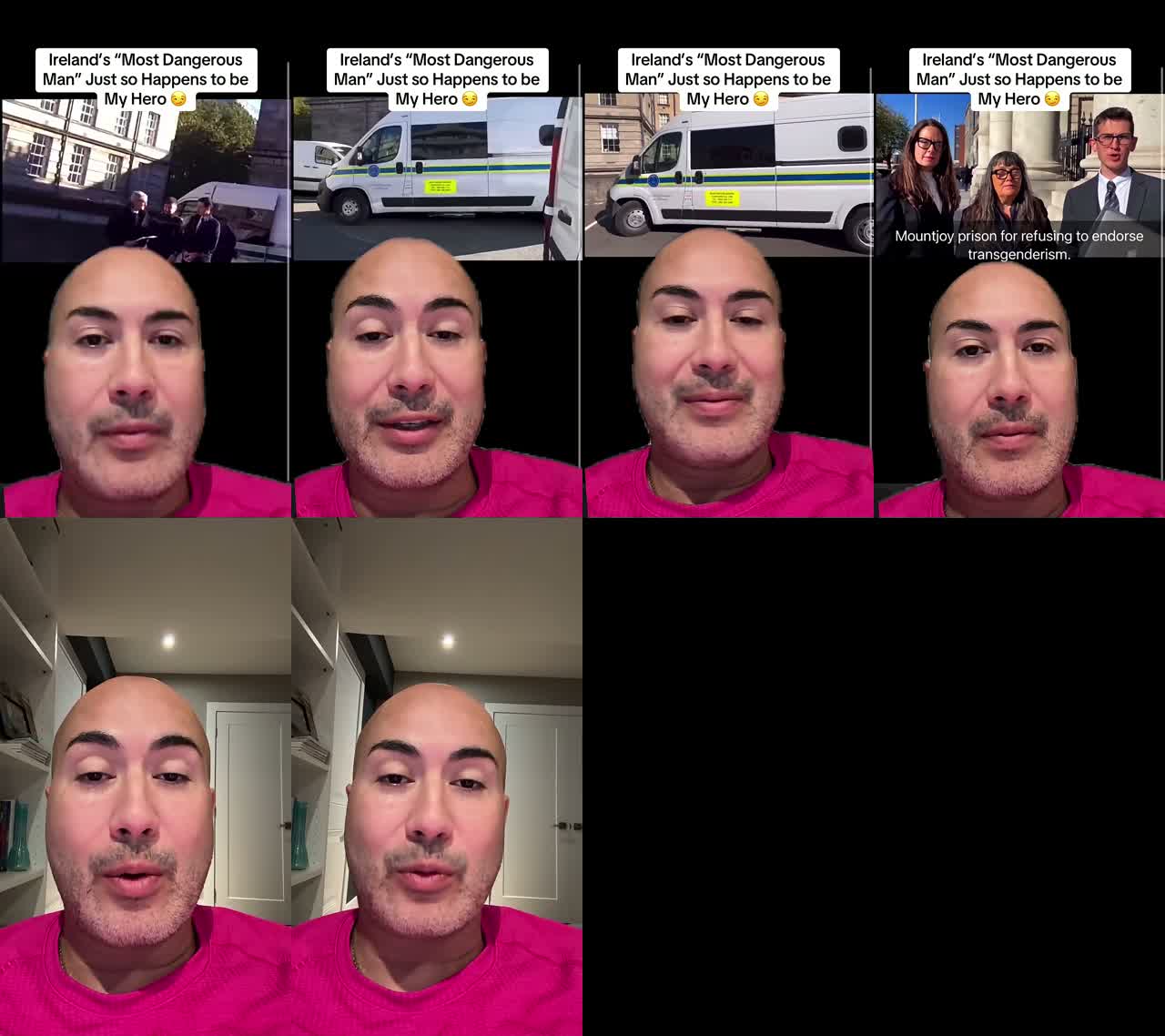
What the Reel claims
“Enoch Burke has just been returned back to Mount Joy Prison for refusing to endorse transgenderism … His crime is refusing to use the pronouns they/them.”
The Reel’s emotional point is that speech/conscience pressure created the dispute. The source-check point is that court orders and contempt findings are the operative reason he was jailed.
What the court record says
RTE and TheJournal reported in May 2026 that Burke remained in prison after refusing to obey a court order banning him from trespassing at Wilson’s Hospital School. Those reports also state the dispute began after Burke objected to a student name/pronoun request.
Irish Legal’s summary of The Board of Management of Wilson’s Hospital School v Burke (No. 6) [2026] IEHC 431 quotes Mr Justice Brian Cregan saying Burke was not imprisoned for religious beliefs, but for refusing to obey an order restraining him from trespassing at the school. The Courts.ie judgment in [2026] IEHC 31 states the same point: Burke was recommitted for contempt after further breach of the school-property order.
Why the distinction matters
If a state really imprisoned someone directly for holding or stating a belief, that is one type of free-speech story. If a teacher is jailed after repeatedly defying injunctions and refusing to purge contempt, that is a different legal story — even if the underlying employment dispute raises real conscience and compelled-speech questions.
The strongest honest headline is: Burke’s pronoun dispute is real; the jail order is contempt for breaching school-property court orders.
Claim-by-claim
| Claim | Label | Evidence |
|---|---|---|
| Burke spent hundreds of days in prison. | Supported. | BBC, RTE, TheJournal and Irish Times report 400+, 650+ and later 700+ totals at different dates. |
| He was jailed simply for refusing pronouns. | Misleading shorthand. | The dispute began over pronouns, but the court reason was contempt / breach of injunctions. |
| He could leave by purging contempt. | Supported. | RTE/TheJournal quote Justice Cregan saying he could be released if he committed to staying away. |
| The case raises conscience/speech questions. | Legitimate debate. | Burke’s own position and reporting make that context clear; it does not change the legal reason for committal. |
JudgeWatch / CanadianJudges extraction
This is a court-order story, so the cross-site judge rule applies. A neutral source trail has been created for the Irish High Court Burke proceedings. Publicly identified judges include Brian Cregan, Alexander Owens, Michael Quinn, Mark Sanfey and others in accessible reporting. The entry is for monitoring only; it is not a misconduct finding.