Digital ID · UN documents · Source check
UN Pact for the Future: real Global Digital Compact text, overstated Digital ID warning
A Survival Hub Instagram Reel points to the UN Pact for the Future and its annex, the Global Digital Compact. The document is real. The digital-governance language is real. But the strongest “mandatory legal digital identity for everyone” version outruns the exact text in the PDFs checked here.
Live document copies
Full adopted UN package
Pact for the Future, Global Digital Compact and Declaration on Future Generations.
Key excerpts
Extracted passages on digital public infrastructure, information integrity, misinformation/disinformation.
Source package note
Capture notes, document identification, Instagram caption metadata and access limits.
What the Reel says
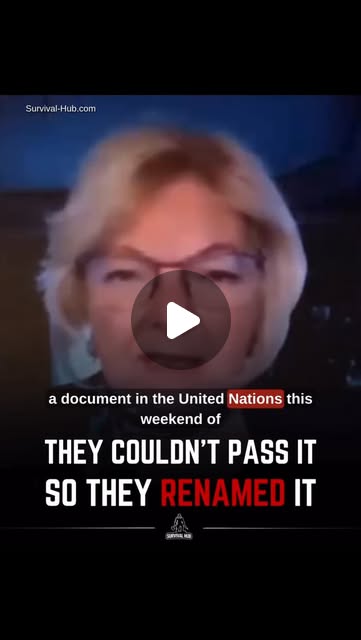
The captured Instagram caption says “They could not get it through the WHO,” then points to the UN Pact for the Future, adopted in September 2024. It says the Global Digital Compact commits states to digital public infrastructure, legal digital identity, information integrity and countering misinformation. It argues the text is non-binding now but could become implemented later.
Saved Instagram caption/metadata · Captured Instagram OG image
What the document actually says
| Claim lane | Status | PBC note |
|---|---|---|
| The Pact for the Future and Global Digital Compact exist. | Verified | UN pages and PDFs confirm adoption at the Summit of the Future on 22 September 2024. |
| The Global Digital Compact discusses digital public infrastructure. | Verified | The text describes “resilient, safe, inclusive and interoperable digital public infrastructure” and calls for safeguards. |
| The PDF says “legal digital identity for everyone.” | Not found as exact text | Local extraction found “digital public infrastructure,” but searches did not find exact phrases “legal identity” or “digital identity” in the official PDFs checked. |
| The compact discusses misinformation / disinformation / information integrity. | Verified | The text discusses information integrity and international cooperation around misinformation, disinformation and hate speech online, while also referencing human rights, privacy and freedom of expression. |
| The document is binding domestic law in Canada by itself. | Not shown | This is a UN General Assembly framework/resolution-style package. Implementation would require governments, laws, agencies, procurement or future policy decisions. |
| Civil-liberties/function-creep concern. | Reasonable watch item | Non-binding frameworks can still influence policy. PBC’s watch question is how governments preserve paper alternatives, privacy, consent, no biometric creep and public accountability. |
What is the United Nations?
The United Nations is an international organization created in 1945 after the Second World War. Its founding treaty is the UN Charter. Its stated purposes include maintaining international peace and security, developing friendly relations among nations, cooperating on international problems, promoting human rights, and serving as a forum where states negotiate and coordinate.
Main UN organs
| Organ | Role |
|---|---|
| General Assembly | Forum of all UN Member States; adopts resolutions and budgets. |
| Security Council | Primary responsibility for international peace/security; 5 permanent and 10 elected members. |
| Economic and Social Council | Coordinates economic, social and development work. |
| International Court of Justice | Main judicial organ of the UN. |
| Secretariat | Administrative body led by the Secretary-General. |
| Trusteeship Council | Suspended operations after trust territories completed transition. |
Who are members?
The UN has 193 Member States. The list is provided as downloadable TXT and CSV above. The Holy See and the State of Palestine have observer-state status and are not counted among the 193 Member States.
PBC bottom line
The Reel points to a real document and a real digital-governance agenda. The careful civil-liberties issue is not “the UN has already made Digital ID mandatory.” It is whether non-binding global frameworks become national requirements later through laws, procurement, benefits systems, professional credentials, banks, travel, health systems or platform rules. That is where paper alternatives, privacy audits, consent rules, no smartphone requirement and limits on biometric/centralized tracking matter.